Showing posts with label world war II. Show all posts

Wednesday, July 11, 2012

They aren't making Frenchmen like the used to


One of the good ones has left this world.  Robert de la Rochefoucauld died on May 8th.  The Count was born into a long lineaged aristocratic family based in the Loire Valley in 1923.  He was the stuff of legends during World War II.  When Hitler invaded France, a young Rochefoucauld joined De Gaulle's Free French Forces and immediately started blowing things (and Germans) up.  When the Gestapo began to get too close, he left for Spain and joined the British Special Operations Executive.  Whilst with the SOE, he parachuted into his homeland time and again.  He blew up rail road tracks, escaped via a stolen limousine, smuggled explosives in hollowed out loaves of bread and once escaped the Nazis by donning a nun's habit and strolling right by them.  My favorite exploit was when, after being actually captured, he faked a seizure, whacked one guard with a table leg to break his neck when he came in range, then stole his gun and shot the other two guards.  Yup, they certainly are not making Frenchmen like they used to.

Tuesday, June 19, 2012

"Freedom is not free"

5th US Armored Division SSI.svg

The above quote is from Col. George C. Benjamin, Ret., age 96 and a resident of Auburn, Maine.  Those were last words spoken as the 5th Armored Division Association closed its 66th Reunion in Bangor, Maine this past weekend.  It was in reference to the more than 1,000 members of the Division that came ashore on Utah Beach, but did not make it home to enjoy the 1st reunion, let alone the 66th.  Sadly, those are also the last words that will ever be spoken in any official capacity by a member of that great and historic band of warriors.  They concluded that there were too few veterans and those that were still with us were too old.  So they decided their reunion over the weekend will be their last.  At least here on Earth.  Thank you for your service.

Friday, June 8, 2012

My apologies to the heros of the battle of Midway for missing the anniversary


June 4, 1942.  Midway is just that, a barren island halfway across the Pacific.  And as such, it was of immense strategic value to fighting forces looking at each other from both the East and the West.  Chester Nimitz was put in charge of cleaning up the disaster at Pearl Harbor by Roosevelt himself.  It was well known that the strategy (developed before WWII even broke out) was to play for time with the Japanese, win in Europe and then take care of Asia.  When Roosevelt looked around for the right guy to fight a controlled, delaying action, maybe the President was fooled by Nimitz's calm, Texas demeanor.  However, he picked a true warrior.  So when faced with the prospect of loosing the strategic outpost, Nimitz did not opt for the conservative course of letting the island fall while the US re-established its Pacific naval forces to try to take it back in the future.  He seized the opportunity to put a big dent in the Japanese naval capabilities.  Bear in mind, theirs was better than ours at the time.  We were down to two carriers that were functional in the theater, maybe three if the Yorktown could be patched up with some spit, bailing wire and American know-how.  And the Rising Sun had the edge in their air power too, with their zero's far outperforming our old F4F Wildcats.  But that didn't stop old Chester (or actually young Chester who was only 56 years old).  In the great tradition of his Texas home boys, he saddled up and took his posse after the bad guys who messed up Pearl Harbor.  Carrying the Texas Ranger analogy forward, his top deputy got shot next.  Bull Halsey, who he would've sent in charge of the fleet, was waylaid in a Pearl hospital with a bad bout of debilitating psoriasis.  So Nimitz picked another young gun, Admiral Spruance at a mere 55 years old to head up the group.  And off they went.  With the Yorktown a bit late to the fight, but deemed battle worthy (enough), Spruance ordered Task Force 16 to proceed toward contact with the enemy fleet with understanding that the Yorktown group would be coming along.  The air group on the Enterprise was lead by Wade McCluskey, who had only turned 40 a few days before.  Per his orders, he got his group in motion, armored and up in the air.  However, delays beset all of the other groups.  Finally, with half their fuel burned while waiting around, they were given the order to proceed alone by a frustrated Spruance.  One look at the gauges told the men it was not going to be a round trip.  As it turned out, McCluskey ended up with 32 dive bombers--and nothing else.  Like his commanders, McCluskey was not a man of hesitation, so he and his group took off to the anticipated position of the Japanese fleet.  Only when the fly boys got there, they were alone.  As they started a search grid, two the bombers ran out of fuel and had to ditch in the water.  McCluskey was just about to be forced by low fuel into breaking off the search when he spotted a lone vessel traveling as fast as it could.  He correctly surmised that it was a straggler that was racing to catch up with the rest of the Japanese fleet.  He used the "V" of the ships white wake as an arrow and pressed forward in search of the enemy.  Sure enough, the entire Kido Butai came into view.  The airmen knew their high value targets well.  They wanted the Japanese fleet's largest carrier Kaga and also the flagship carrier Akagi.  McCluskey had tasked his two best squad leaders to lead the parallel attacks, Lieutenants Ed Gallaher and Dick Best (another young whippersnapper at only 32 years old who still got carded buying a beer).  Unfortunately, McCluskey did not come up through ranks as a bomber pilot, but rather as a fighter jockey.  Bomber doctrine would differentiate the target as near and far and not right and left.  Tactics called for Gallaher's lead squadron to fly past the closer carrier and attack the far carrier and then Best would swoop down on the the near one. McClusky made a potentially disastrous error when he finally broke radio silence and ordered Gallaher to take the carrier "on the left" and Best to take the one "on the right".  To add to the confusion, Best never even heard that order.  Post battle speculation was that he radioed to McCluskey with his target at the exact moment McCluskey radioed to him.  In any event, he had just lined his boys up to dive onto the target he thought was his, the Kaga, when Gallaher, McCluskey and the whole other squadron went screaming past him, jumping his target.  Best desperately tried to signal his squad to hold off, but all but his two wing men, Ed Kroeger and Fred Weber had already committed to the dive.  So 27 of the remaining 30 planes dove on the unsuspecting Kaga.  She was plastered with a whole lot of Pearl payback and left a smoldering, barely floating wreck.  In the best tradition of American airmen before and since, Dick Best gathered his wing men and pointed his nose toward the flagship Akagi in what he thought was a pointless and likely fatal attempt to inflict some harm on his targeted enemy.  Each of the three planes carried single 1,000 pound bombs, which sounds like a decent ordnance, but was more like a mosquito bite on a buffalo considering the size of the carrier.  Only sometimes mosquitoes carry deadly diseases.  Just as they had been taught, all three American pilots sited their bombs dead center of the flight deck, just forward of the bridge.  They pulled up at a mere 1,500 feet and skimmed the water in their attempt to pull out of the dive.  Best's 1,000 pounder did a decent of amount of damage to the flight deck as it punched through.  But that damage was nothing compared to the secondary effects.  The Akagi's flight hanger below the deck was crammed with 18 big "Kate" torpedo bombers, which were all armed with Type 91 torpedoes and fueled up.  Better still, there were carts of ordnance beside the planes and more stacked along the walls.  As the av fuel caught and started to pop off the ordnance, the Akagi was doomed.  That was when the straggling and still limping Yorktown finally caught up to the fray.  It launched all it could muster against the carrier Soryu.  In less than half an hour's time, three quarters of the Kido Butai was destroyed, Pearl was avenged and any thoughts of fighting a staying action in the Pacific were banished.

Wednesday, June 6, 2012

I just switched my default browser from Google to Yahoo


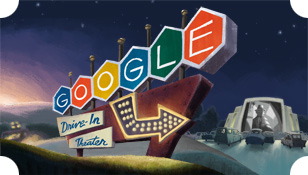
On the 68th aniversary of D-Day, Google chose to honor the 79th aniversary of the first drive-in movie.

Tuesday, June 5, 2012

Politics and war


Even in times of war, and even by military men, political (or maybe marketing) decisions are often made instead of military decisions.  The above photograph is from a wonderful Life Magazine collection of immediately before and then after D-Day.  This picture was taken on the Champs-Elysees in August of 1944.  The day after Paris was Liberated.  I looked for my father, but not surprisingly did not see him.  The reason I looked for my father was because that was the first day he went into Paris.  He and his company had done a lot of dirty work from D-Day on and had been diverted by the brass to go down and help clear the remaining Germans out so the French Capital could be liberated.  And so they did.  They had a few nasty scrapes with what turned out to be the rear guard whose job it was to give the German brass that had been in charge of the occupation enough time to bug out.  The only thing was that when my father and his pals got just into the City limits, after chasing off the last of the Krauts, they were ordered to stand down right where they were.  So those lucky German troops were allowed to disengage and high tail it out of town to catch up with their buddies.  Why,  you may ask, were GIs including my Dad ordered to stop?  Simple.  They looked exactly like you would expect troops that landed on an open beach with artillery and automatic weapons firing down on them from cliffs above, then fought their way in through hedgerows, villages and farms against the best troops a desperate enemy had to offer, and then were pulled down to clear out the passage into the ancient capital of a liberated Ally against the best CYA German troops left around.  In other words, they looked like s%&t warmed over.  And the brass wanted pretty newsreel pics for the people watching on the home front.  So my father and his company was told to bivouac off the road and out of the way while the fresh troops with spotless uniforms marched in precise columns as they liberated the City of Lights for posterity.  In fact, the guys who did the real work weren't given passes or even a hot meal (though it is my understanding that the boys decided on their own to liberate some fresh Parisian libations for a couple of days).  Immediately thereafter, the fresh meat was left to "guard" the City and the experienced troops were sent back to the real front.  But don't worry, he was eventually told he could pull back.  That was sometime in December of 1944.  Right before the Battle of the Bulge.

Monday, May 14, 2012

Found seventy years later

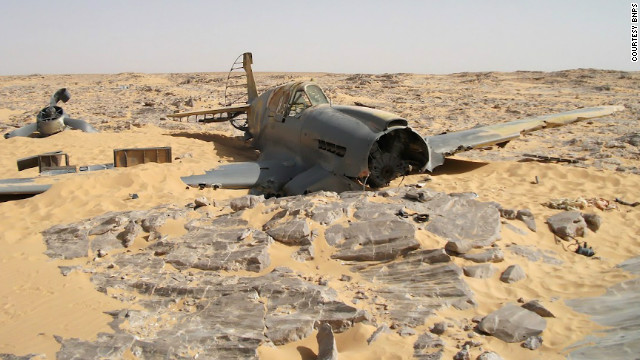
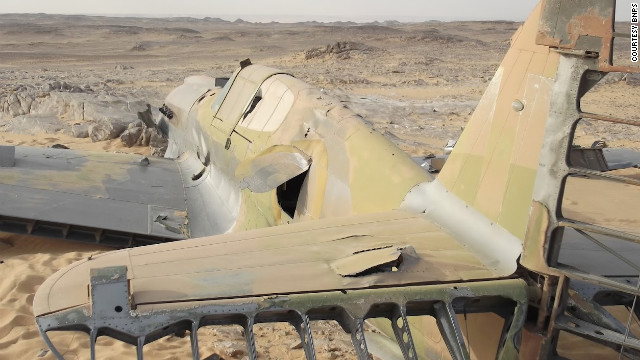
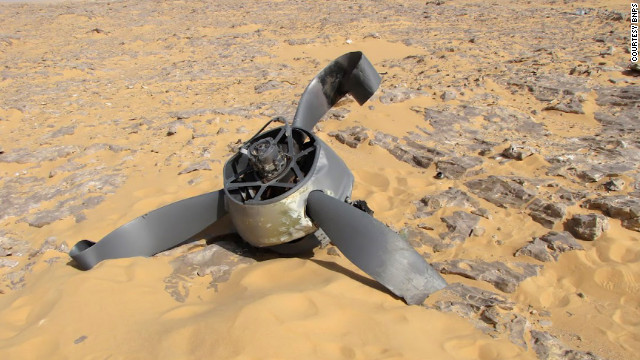
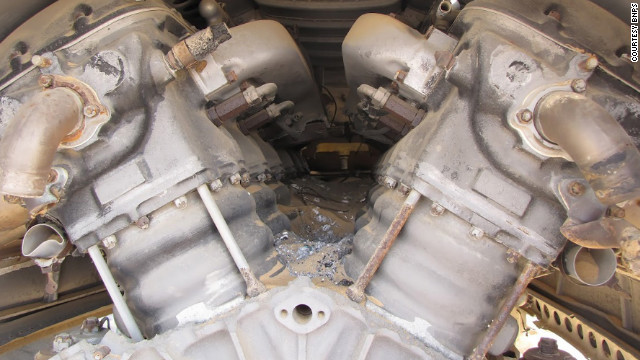
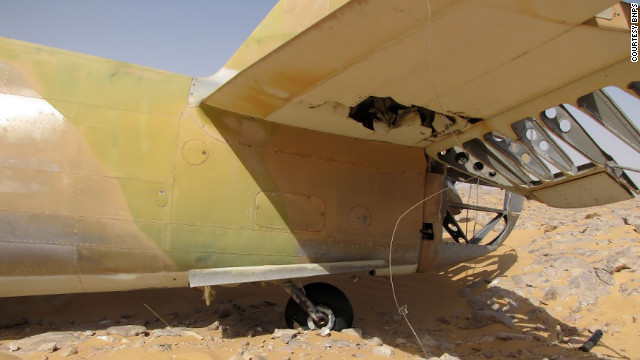
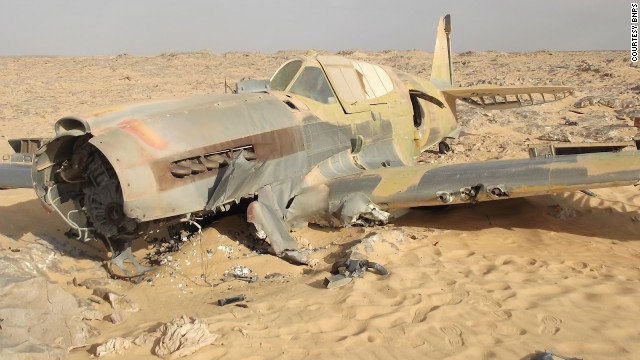
RAF Flight Sargent Dennis Copping was charged on June 28, 1942 with shuttling a Kittyhawk P-40 to another airbase where they could better work on the front landing gear that would not retract.  At the time Rommel was busily chasing the Brits all over the Sahara and every piece of equipment was important.  Unfortunately Sgt. Copping got turned around and ended up running out of fuel over the Egyptian desert.  Well, the plane, but alas not Sgt. Copping, has been found, and in remarkable shape.

In what experts consider nothing short of a miracle, a Polish oil company worker recently discovered the plane believed to have been flown by missing Flight Sgt. Dennis Copping.
As German Gen. Erwin Rommel chased British forces across the North African desert, a stray Royal Air Force fighter crashed in the blistering sands of the Egyptian Sahara on June 28, 1942.
The pilot was never heard from again. The damaged Kittyhawk P-40 -- a couple of hundred miles from civilization -- was presumed lost forever.
The fighter's "state of preservation is incredible," British military historian Andy Saunders said. "The thing just landed there in the desert and the pilot clearly got out. ... It is a complete time capsule really."
Pilots were "flying with very basic life support systems," Saunders said. "His chances of survival were not good."
Almost 70 years after the accident, the plane is extraordinarily well-preserved.
RAF pilots in North Africa at that time didn't have much in terms of rations. Copping's supply would have been very limited, assuming he had food or water at all.
The young pilot, according to Saunders, apparently became disoriented during the flight and headed in the wrong direction. Another RAF pilot flying nearby "tried all sorts of things" to get his attention, but Copping "bizarrely" ignored a series of warnings, Saunders said.
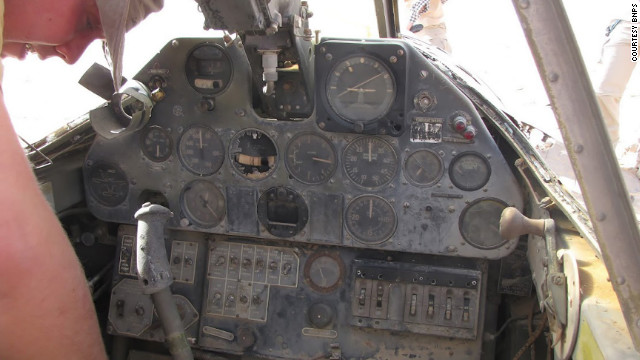
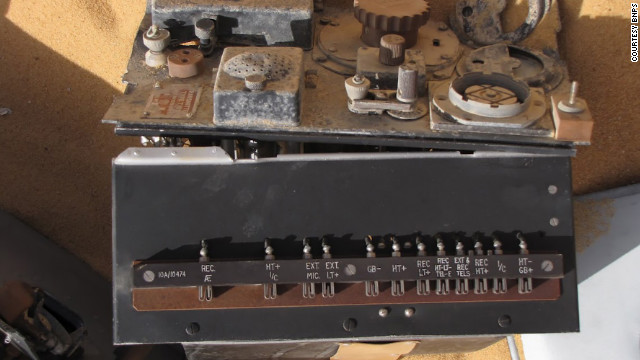
Most of the plane's fuselage, wings, tail and cockpit instruments remain intact.
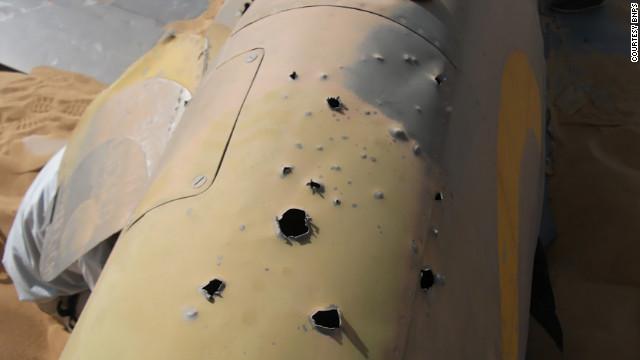
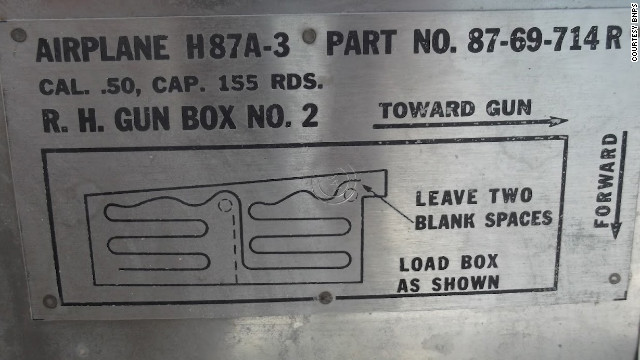
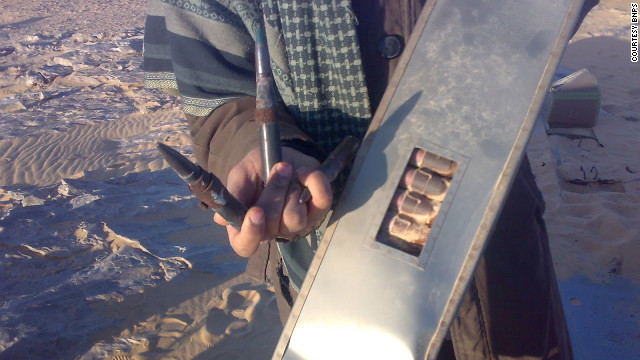
For safety reasons, Egyptian officials have removed its ammunition and guns.
As Copping's story becomes known, British authorities are hoping to bring his plane back to the United Kingdom and put it on display at the RAF Museum in London.


Thursday, May 3, 2012

Thank you for your service, George Vojnovich


And Godspeed on your final journey.  George is a hero.  He just died at 96 in his home in NY.  George received the Bronze Star for his actions as a member of the OSS during WWII--though sadly and shamefully he did not receive his star until 2010.  He formulated, lobbied for and finally implemented a plan to rescue 500 US Airmen who were downed in Nazi controlled Serbia in 1944.  In an effort to starve Hitler's war machine of a crucial resource, the Allies started sending waves of bombers over the oil fields in Romania.  And a lot of them got shot down.  George convinced his superiors to let him work with the underground Serbian group called the Chetniks, and more specifically with their leader Draza Mihailovich.  That was no small feat in 1944 when the US had formally embraced the Serbian Communists and they considered the Chetniks to be enemy collaborators with the Nazis.  Vujnovich lead clandestine mission after clandestine mission called Operation Halyard into Serbia and brought back the downed fighters.  Once again, thank you for your service George.